

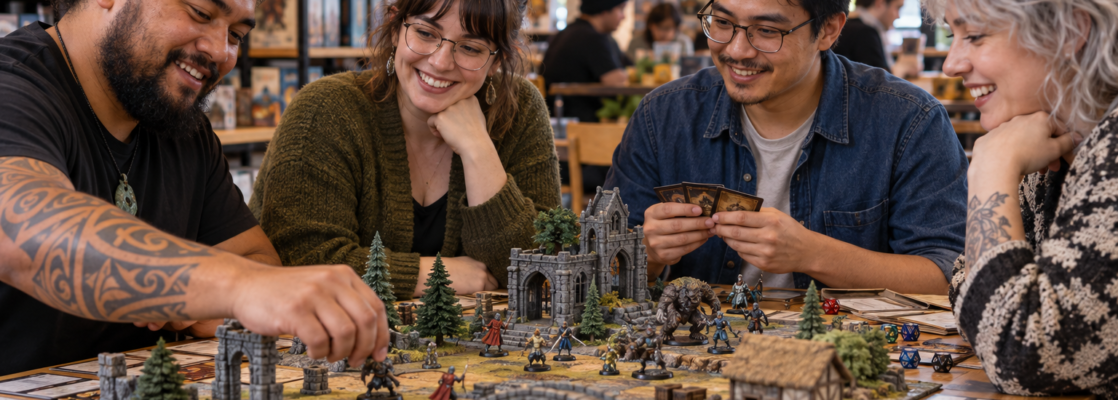
Across New Zealand, interest in warhammer 40k nz reflects a wider appetite for hobbies that bring people together in person. Tabletop gaming gives participants a regular reason to meet, work towards a shared activity and spend time away from everyday pressures. For many players, the appeal extends beyond the game itself to the social routine built around it.
The same pattern can be seen in trading card communities. People looking for yugioh cards nz often find more than products: local events give them a place to practise, meet other players and feel part of a group. That sense of belonging can matter in a period when many social interactions happen online and finding a regular in-person activity takes deliberate effort.
A structured way to connect
Hobby gatherings make social contact easier to organise. A scheduled game night provides a clear time, place and purpose, removing some of the uncertainty that can come with trying to make plans. Participants can focus on the activity while getting to know others gradually.
That structure may be especially useful for people who prefer conversation to develop around a shared interest. Discussing a strategy, helping a newcomer learn the rules or reviewing a close match creates natural openings for interaction. Players do not need to arrive with an established group of friends to take part.
Role-playing groups offer another version of this experience. In dungeons and dragons, players collaborate to make decisions and respond to challenges together. The format creates room for creativity, listening and humour, while a recurring session gives members a reason to stay connected over time.
These activities can also suit different levels of involvement. Some people enjoy competitive events; others prefer casual games, painting sessions or simply watching and learning. Having several ways to participate can make a community more welcoming to newcomers.
Making space for downtime
Games and creative hobbies can provide a useful break from work, study and household responsibilities. Preparing a model, sorting a card collection or concentrating on a match directs attention towards a manageable task with a clear beginning and end.
That does not make a hobby a treatment for stress or a substitute for professional support. It does, however, give people an opportunity to set aside time for enjoyment and social contact. Regular recreation is often one of the first things squeezed out of a busy schedule, despite its practical value in maintaining a balanced week.
The hands-on elements of tabletop hobbies may appeal to people who spend much of their day on screens. Painting, assembling and arranging game pieces involve a different pace from scrolling through a feed. Card and strategy games still demand attention, but the interaction is purposeful and usually shared with someone else.
Around the middle of a busy week, even a short session can offer a change of setting. The broader idea of leisure is useful here: time chosen for enjoyment can include active, creative and social pursuits, rather than only passive rest.
The importance of accessible groups
The potential social benefits depend on whether people can take part comfortably. Clear event details, beginner sessions and friendly introductions can help someone attend for the first time. Venues also need to consider cost, transport, accessibility and whether their schedules suit people with work or caring commitments.
An inclusive atmosphere matters just as much as the event calendar. Experienced players can make a difference by explaining expectations without assuming prior knowledge, offering practice games and treating mistakes as part of learning. A community becomes easier to return to when new members feel welcome before they have mastered the activity.
Local shops, clubs and community venues are well placed to support this approach. Casual tables and organised events can serve different needs, allowing people to choose how much competition or commitment they want. Online groups can help participants find those opportunities, while face-to-face sessions give the connection a regular place in everyday life.
A practical part of a balanced routine
No single pastime will suit everyone, and gaming should sit alongside sleep, movement and other relationships. Its value is often straightforward: it gives people something enjoyable to anticipate and others with whom to share it.
For those drawn to tabletop and card games, the most meaningful outcome may not be a win. It may be the weekly routine, a familiar group and the chance to spend a few hours engaged in something they enjoy. In that way, a niche hobby can make a practical contribution to social wellbeing.


